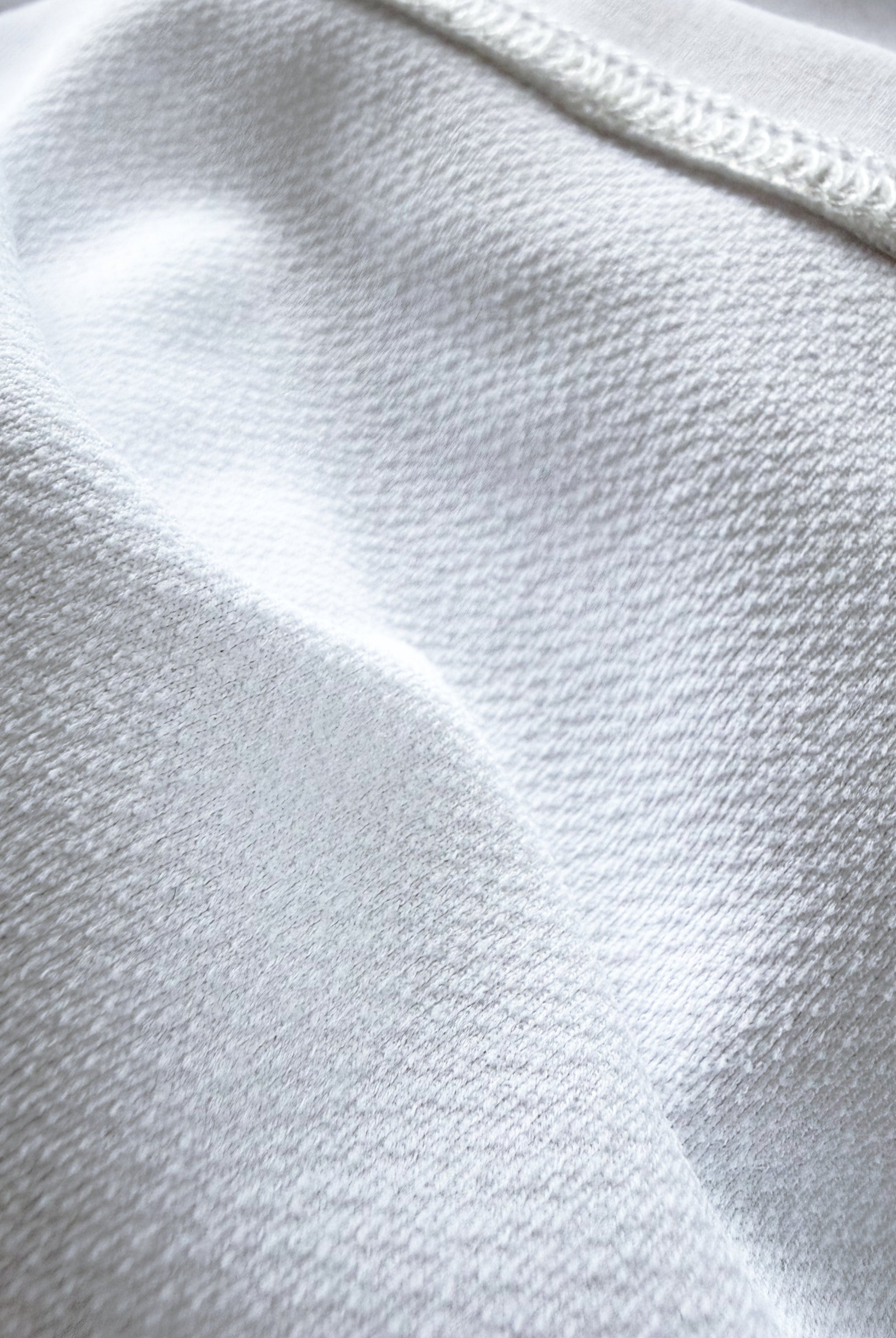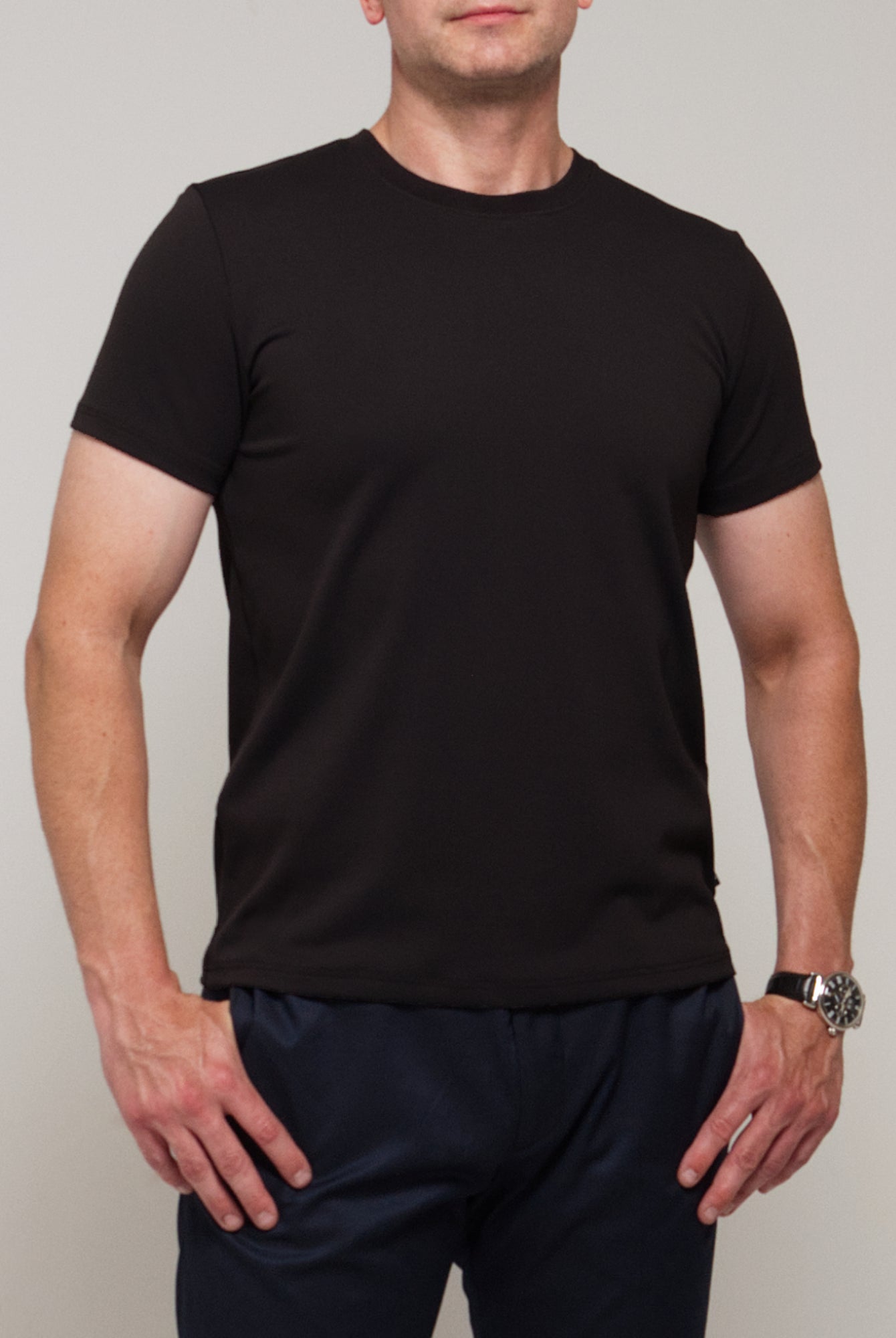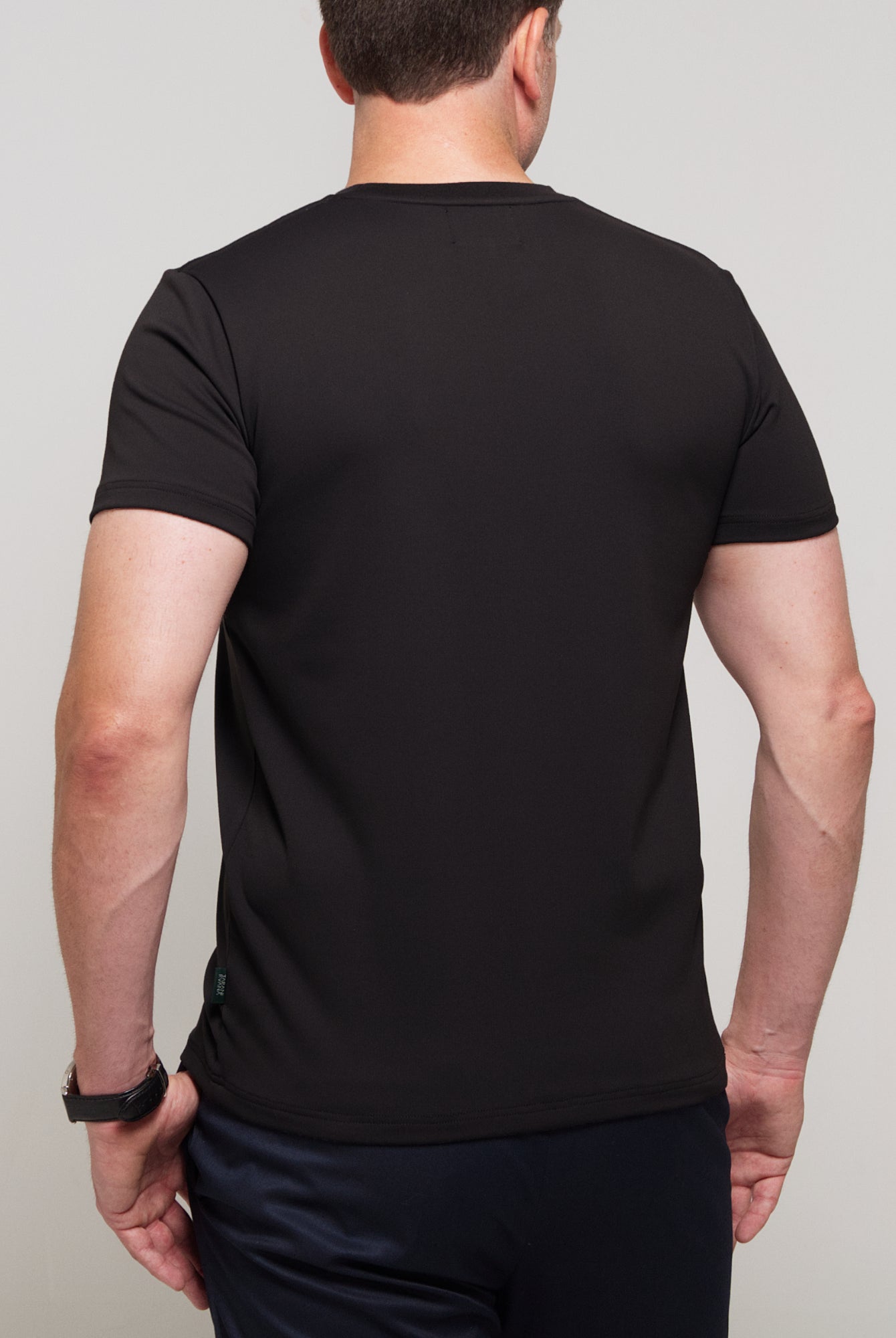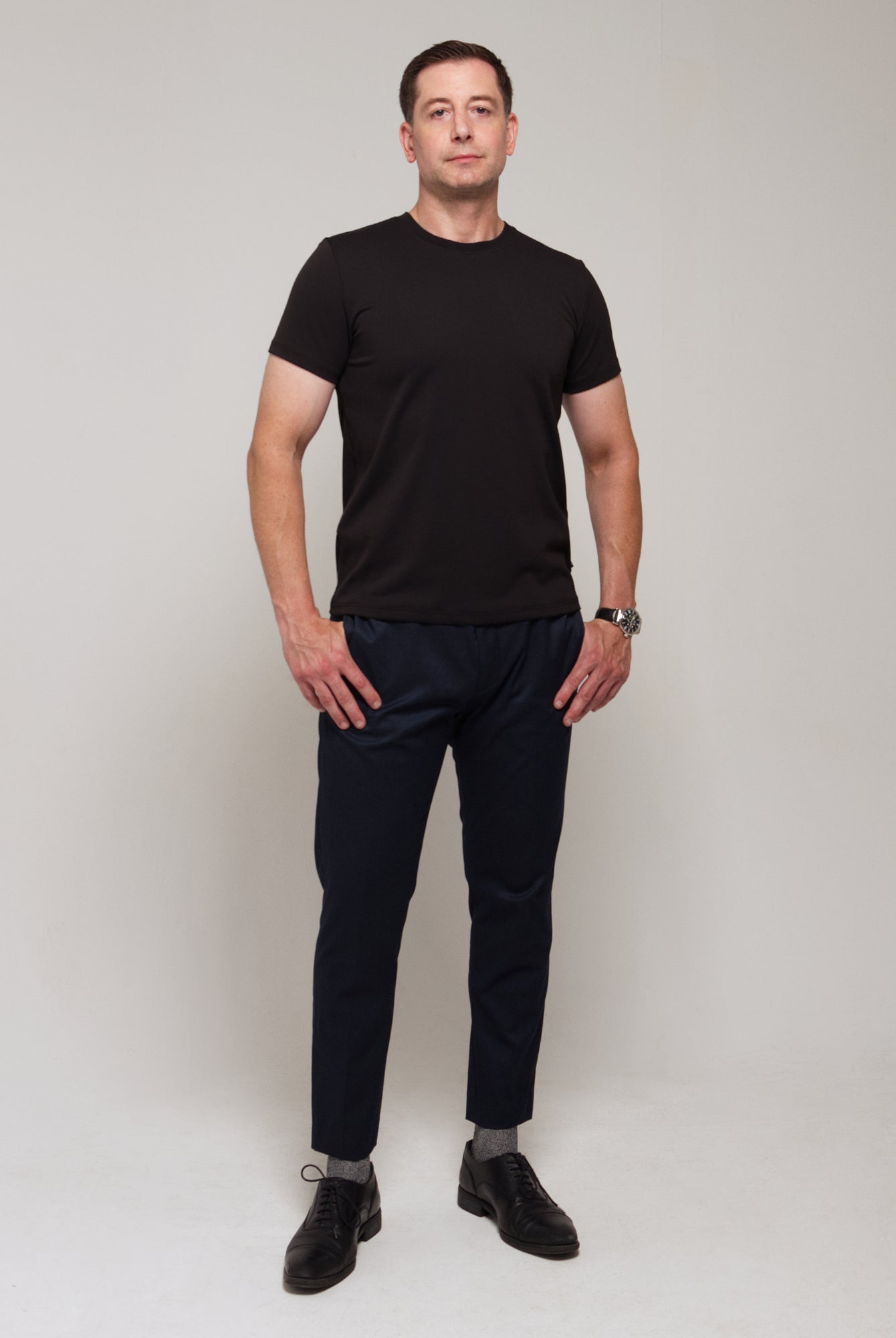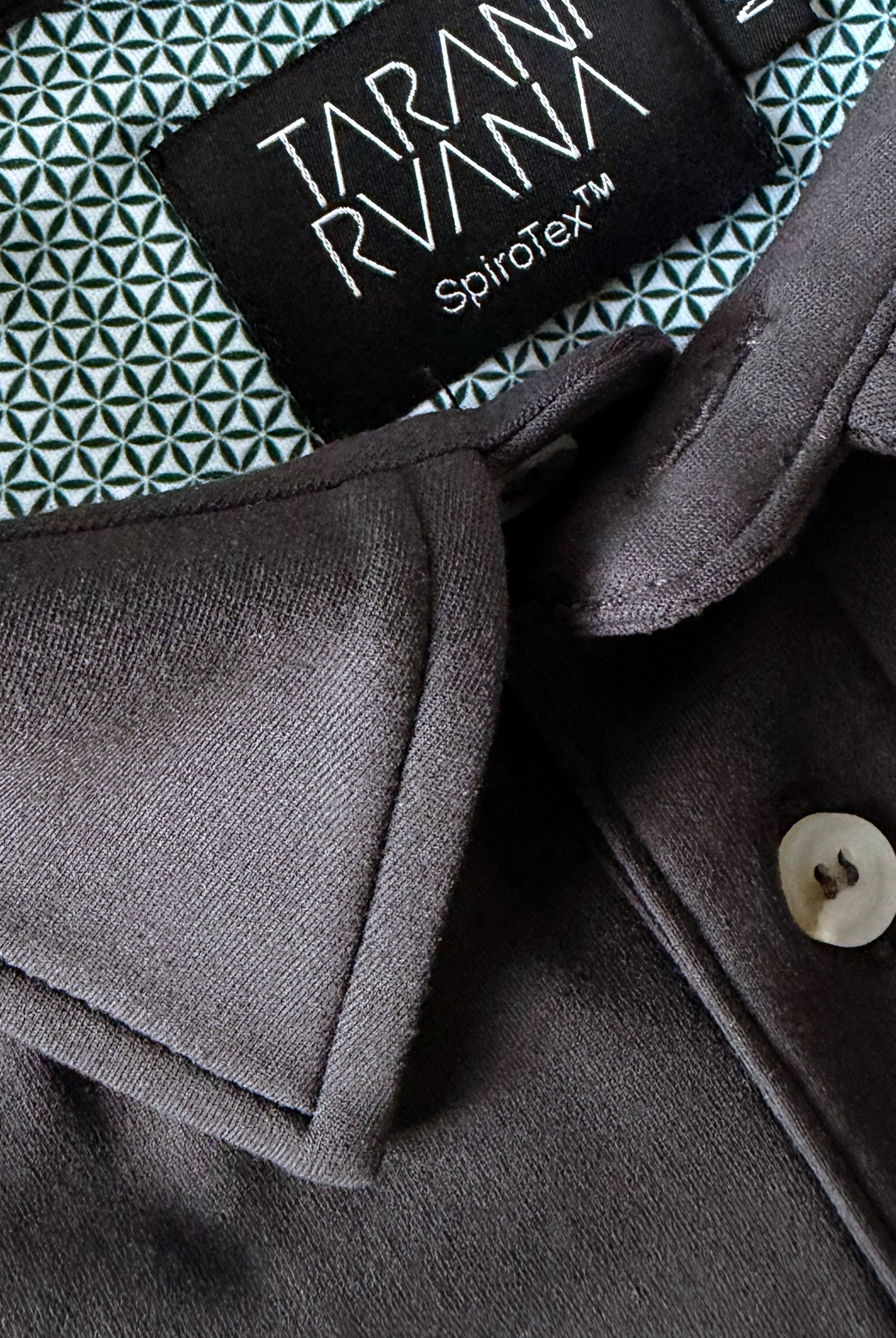
" We prefer measurement over marketing language."
W
e also have a responsibility to ourselves. After years of R&D on SpiroTex™, subjective claims are not enough. Independent data gives a clearer foundation — for the people who wear the garment and for the people who built it.
Many performance claims rest on descriptions such as "feels premium," "dries fast," or "built to last." These statements are difficult to verify. For a garment at this level, laboratory results matter more than language alone.
We commissioned Intertek, a globally recognized independent laboratory, to evaluate the key performance characteristics of SpiroTex™. The results are recorded in Report #TWNT02301295 [Intertek Report].
01/ Why Lab Testing Matters
The hand feel is real, but incomplete. A fabric can feel pleasant at first touch and still lose shape, pill, trap moisture, or degrade after repeated wear and washing.
Some approaches rely on the natural properties of traditional fibers. Others depend on chemical finishes that diminish over time. Both can leave the customer relying on claims rather than measurable outcomes.
We engineered SpiroTex™ for structural, lasting performance. Testing under controlled laboratory conditions was a necessary step to confirm that the architecture performs as designed.
02/ What We Tested
The Intertek report covers five core metrics. Each result is stated against the relevant standard or recognized threshold:
- UV Protection: Lab-verified to a mean UPF of 2,000 [Intertek Report #TWNT02301295].
Under U.S. labeling standard ASTM D6603, the maximum UPF rating that can be displayed on commercial products is UPF 50+. Ratings above 50 are labeled as "50+" and classified as "Excellent UV Protection" . While the standard permits calculated values above 50, the label is capped at 50+ as the highest tier. For a product to qualify for the 50+ rating, the minimum measured UPF must be greater than 40, and the UVA transmission must be below 5% .
- Drying Rate: 8.74 minutes under AATCC TM201 (Intertek Report TWNT02301295).
Under comparable heated-plate drying tests, conventional cotton typically requires substantially longer to dry. Exact times vary with airflow, moisture load, and fabric weight, but the directional gap is consistent. (Source: AATCC TM201 method; published drying-rate studies on cotton vs. synthetic fabrics.)
- Pilling Resistance: ASTM 4.5 / 5.0 under ASTM D3512 [Intertek Report #TWNT02301295], where 5.0 indicates no pilling.
ASTM D3512 (Random Tumble Pilling Tester) is the standard method for determining the propensity of a fabric to form pills . A rating of 4.5/5.0 is an excellent result, confirming the topographical integrity of the continuous filament surface. Many everyday knits score 3.0 or lower after comparable abrasion testing.
- Vertical Wicking: Greater than 150 mm under AATCC TM197 (Intertek Report TWNT02301295).
This demonstrates effective capillary movement of moisture away from the skin under the standard vertical wicking protocol.
- Contact Cooling: Q-max of 0.103 W/cm² under FTTS-FA-019 [Intertek Report #TWNT02301295].
This meets the recognized threshold for cool-touch performance. Under JIS L 1927, the Japanese industrial standard for evaluating the cool-touch feeling of textiles, a Q-max value of 0.100 W/cm² or greater (measured at a temperature difference of 10°C) indicates a cool-touch effect . SpiroTex™ exceeds this baseline.
We measured what we claim.
" We measured what we claim."
03 / Why This Matters
There are two ways to evaluate a garment.
You can accept marketing language, or you can review independent test results.
The Intertek report is not a badge. It is a document that records how the fabric performed under standardized methods. We share it because the data belongs in the open — not only in an internal file.
Performance is built into the structure. It does not rely on temporary chemical finishes that wash away.
The lab results are available. The garments are available.
Poised Motion.
Sources
-
Intertek Testing Services Taiwan Ltd., Report No. TWNT02301295 (issued April 10, 2026). Primary source for all SpiroTex™ performance data.
-
ASTM D6603 Standard Guide for Labelling of UV-Protective Textiles. Establishes the UPF 50+ maximum labeling standard and classification criteria for UV-protective apparel.
-
ASTM D3512/D3512M-22 Standard Test Method for Pilling Resistance and Other Related Surface Changes of Textile Fabrics: Random Tumble Pilling Tester. The test method used to verify the 4.5/5.0 pilling rating.
-
JIS L 1927 Testing Method for Cool Touch Feeling of Textiles and Textile Products. Japanese industrial standard establishing the Q-max ≥ 0.100 W/cm² threshold for cool-touch performance.